Ball pits and bean bags are two of the most popular choices for toddler play spaces — and if you've found yourself comparing both, you're not alone. They're often sold side by side, aimed at the same age group, and priced similarly. But they serve quite different purposes. This guide will help you understand exactly what each one offers and which is the better fit for your child.
What a Ball Pit Actually Does
A ball pit isn't just a container for plastic balls. At a developmental level, it offers something specific: proprioceptive input — sensory feedback from joints, muscles, and tendons that helps children understand where their bodies are in space.
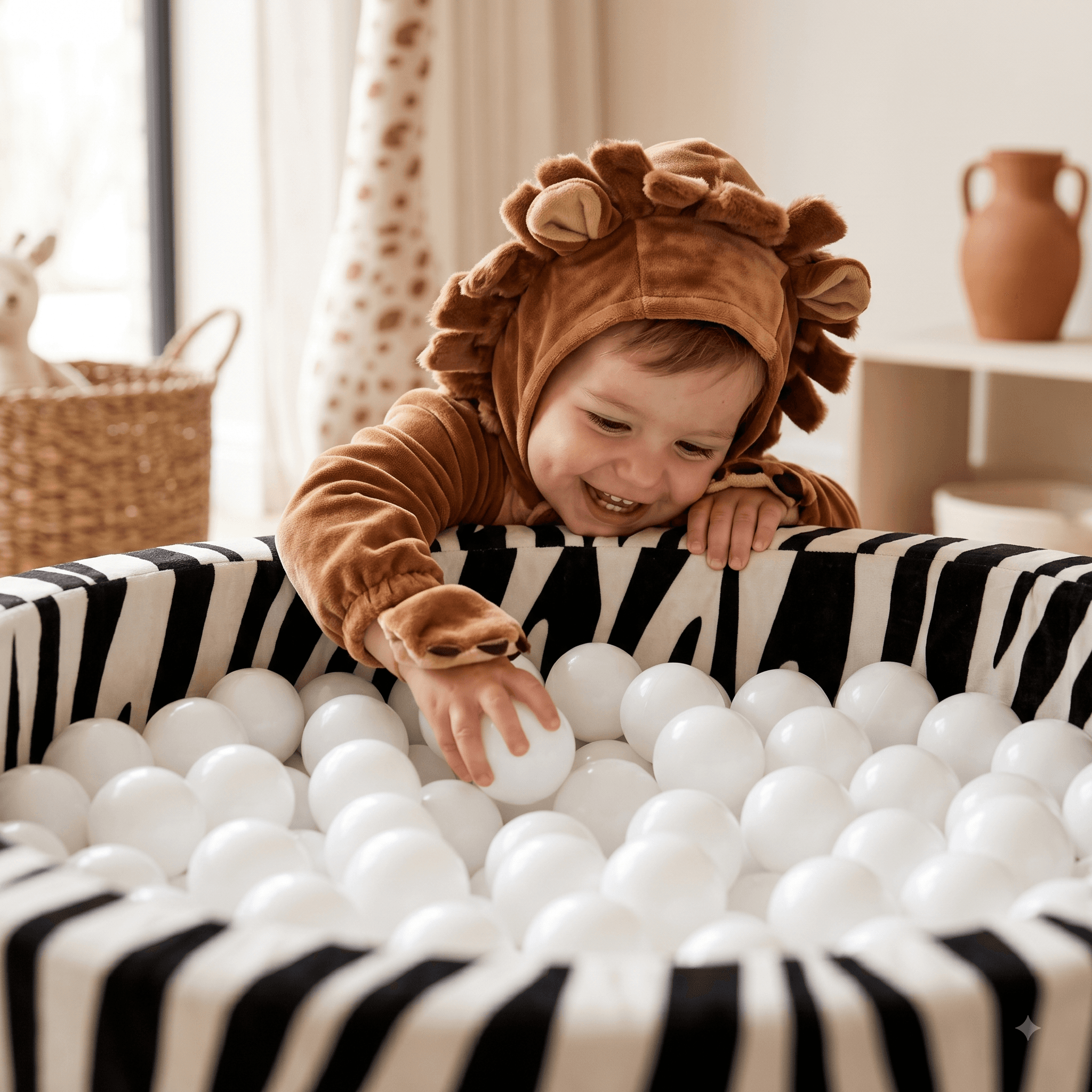
When a toddler climbs into a ball pit, digs through it, throws balls, or sits in the resistance of the filling, their nervous system is receiving rich sensory input. For children who seek sensory stimulation (most toddlers do), this is deeply satisfying. Many occupational therapists recommend ball pits specifically for children who need additional proprioceptive grounding.
The social dimension is also worth noting: ball pits are almost always a shared experience. Two or three children playing in a ball pit, throwing balls at each other, is a fundamentally different activity from one child reading quietly on a bean bag.
What a Bean Bag Does Better
A bean bag is a comfort object as much as a piece of furniture. Unlike a ball pit, it's calm. The soft, enveloping shape gives a different kind of sensory experience — the gentle pressure of being lightly cradled, which has a quieting effect on many children.
Bean bags work particularly well for:
- Reading time — the shape naturally positions a child slightly reclined, comfortable for books
- Screen time — the soft resistance is more supportive for longer sitting than a hard floor
- Winding down — many parents use bean bags as a transition tool between active play and rest
- Individual play — a bean bag creates a "spot" that feels owned, which some children respond to strongly
A bean bag also has more flexibility in placement. A ball pit needs dedicated floor space; a bean bag can tuck into a corner, sit beside a bookshelf, or move between rooms.
The Age Factor
For children under 18 months, neither is ideal — a very young toddler falling face-first into balls is a risk, and bean bags are too soft for unsupported sitting.
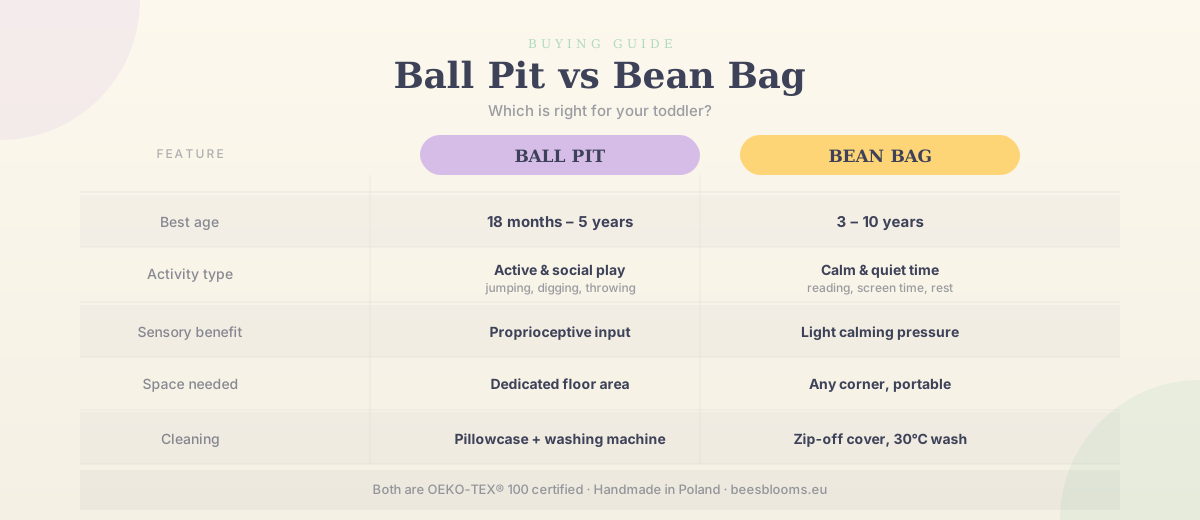
From 18 months to 3 years, a ball pit generally wins. The active, sensory-rich play aligns with this age's developmental priorities — proprioceptive input, gross motor development, cause-and-effect exploration.
From 3 to 7 years, both work well in different contexts. If you can only choose one, consider your child's temperament: energetic and sensory-seeking → ball pit; calm, bookish, or a child who needs "their corner" → bean bag.
Many families find that one of each is the real answer. They serve complementary purposes and rarely compete for the same use.
The Practical Difference
Ball pits: Take more floor space. Balls can scatter — this is either delightful or maddening depending on your tolerance for stepping on them at 11pm. They need occasional ball-washing (a pillowcase in the washing machine handles this easily). Our [children's ball pits](/shop/ball-pits) include 200 BPA-free, CE-certified balls and have foam-padded walls with a machine-washable fabric cover.
Bean bags: More portable and easier to reposition. Easier to clean — zip-off cover, machine-wash at 30°C. No scattered balls, no setup required. Our [bean bags for children](/shop/bean-bags) arrive vacuum-packed and expand to full shape within 48 hours. The covers wash without losing shape or colour.
Both carry OEKO-TEX® 100 certification on all materials — foam, filling, fabric, and dyes.
Which Should You Buy?
Buy a ball pit if:
- Your child is between 18 months and 5 years old
- You have floor space to dedicate
- Your child is energetic, sensory-seeking, or needs physical play outlets indoors
- You want something that works for multiple children playing together
Buy a bean bag if:
- Your child is bookish, calm, or enjoys quieter activities
- Space is limited or furniture needs to move between rooms
- Your child is older (5+) and the ball pit stage has passed
- You want a piece that doubles as proper seating for screen time or reading
Buy both if:
- Space allows it
- You have more than one child
- Your child has different needs at different times of day — which most do
Browse our [ball pits](/shop/ball-pits) and [bean bags for children](/shop/bean-bags) to compare what's in stock, or explore the full collection for mix-and-match possibilities.