If you've shopped for children's furniture or textiles, you've probably seen the OEKO-TEX® label. It appears on mattresses, clothing, bedding, and soft furnishings across the market. But what does it actually mean? And why does it matter more for children's products than for almost anything else in your home?
What Is OEKO-TEX® Standard 100?
OEKO-TEX® Standard 100 is an independent certification system for textile products. Developed in 1992 and administered by the OEKO-TEX® Association — a consortium of 18 independent research and testing institutes across Europe and Japan — it certifies that every component of a product has been tested and found free from harmful substances.
The key word is every. A product only earns the Standard 100 label if all its parts pass testing: not just the face fabric, but the yarn, dyes, prints, threads, zips, and filling. And the certification isn't permanent — it runs on a batch-by-batch basis and must be renewed.
This is not a brand-controlled marketing claim. It's a third-party laboratory certification.
What Exactly Gets Tested?
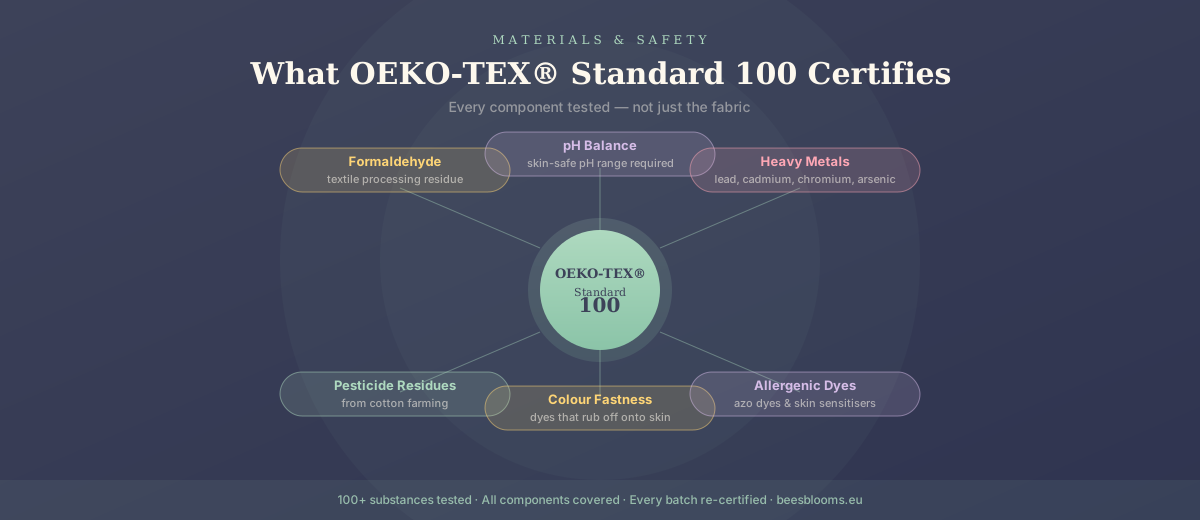
The current OEKO-TEX® Standard 100 tests for over 100 harmful substances, including:
- Formaldehyde — used in textile processing to prevent creasing; a known irritant and probable carcinogen at high levels
- Heavy metals — including lead, cadmium, chromium, and arsenic, which can appear in dyes
- Pesticide residues — from cotton and other natural fibre farming
- Allergenic dyes — certain azo dyes associated with skin reactions
- pH value — too-acidic or too-alkaline fabrics irritate sensitive skin
- Colour fastness — dyes that rub off onto skin may transfer harmful substances
For products in Product Class 1 — intended for babies and toddlers up to 36 months — the standards are significantly stricter than for adult textiles. The testing framework assumes that babies put fabrics in their mouths and have more permeable skin than adults.
Why It Matters More for Children's Furniture
Adults interact with furniture. Children inhabit it.
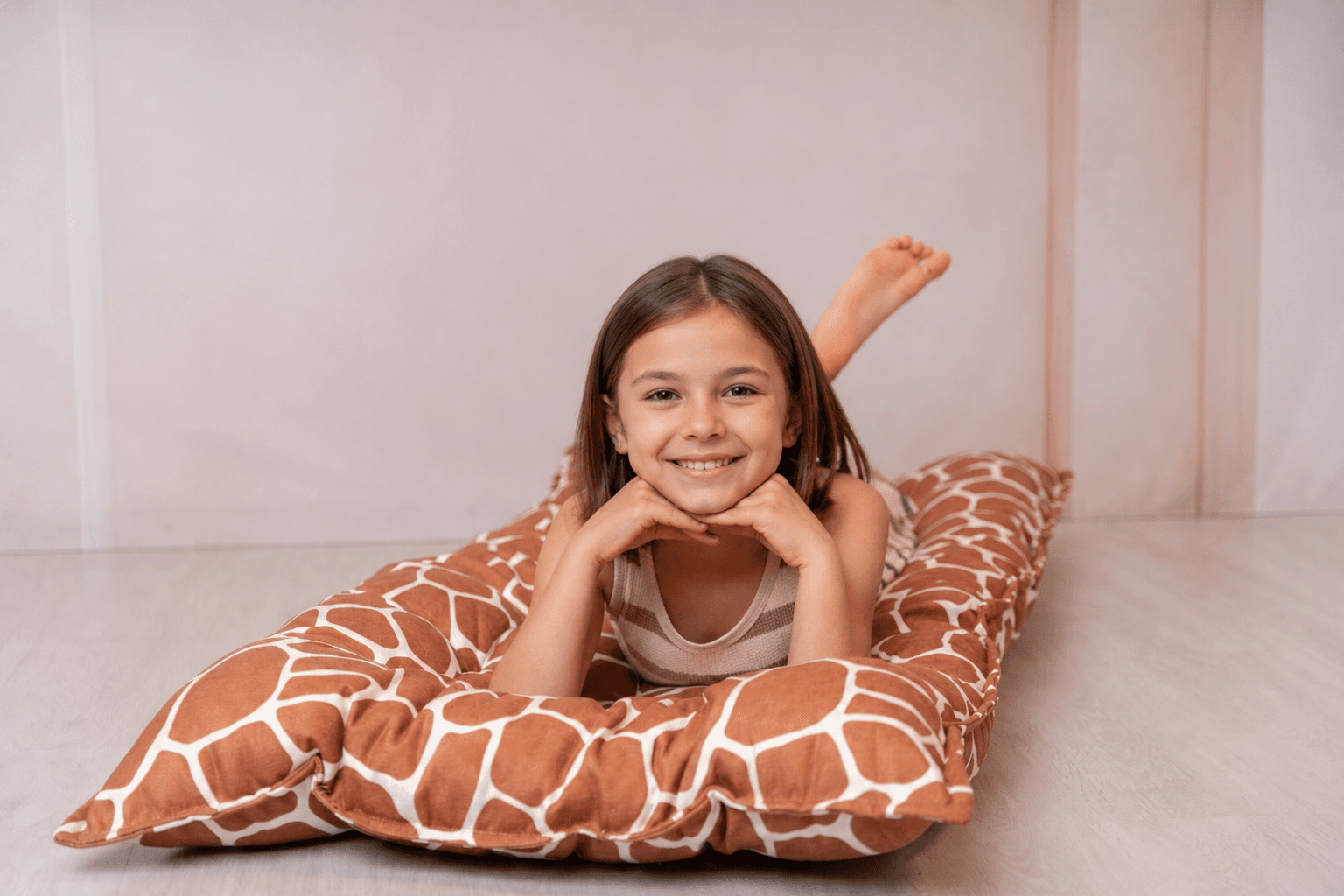
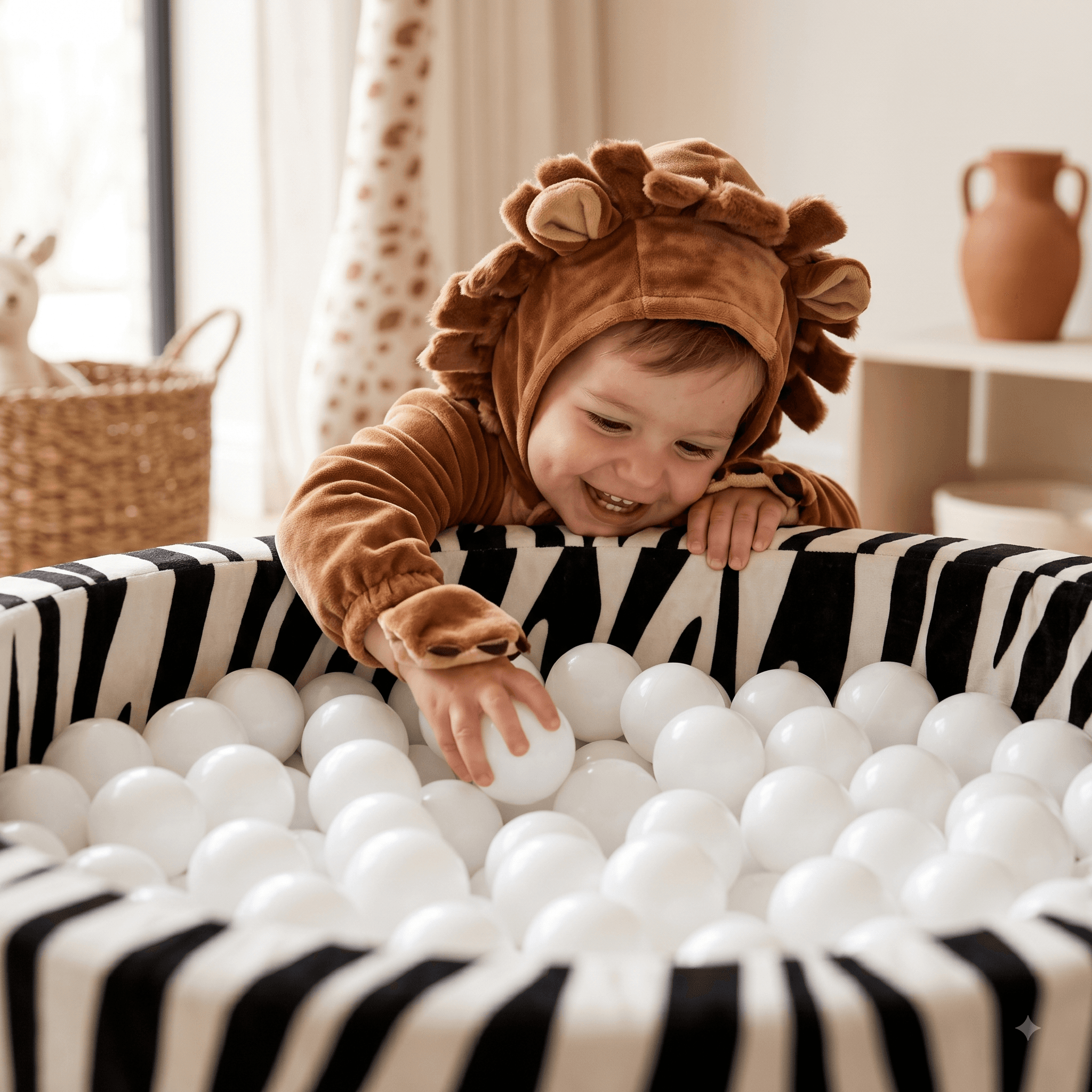
A child on a bean bag is pressed face-first into the fabric. A toddler napping on a sofa has their cheek in contact with the cover for hours. A child in a ball pit is surrounded by materials on all sides, pressing into foam walls with bare arms and legs.
The cumulative skin contact surface area over a childhood is enormous. Textile chemicals that are largely irrelevant for an adult sitting on a chair for 30 minutes become genuinely significant for a child in sustained, full-contact play.
Cheap foam in particular is worth scrutinising. Conventional polyurethane foam uses catalysts and blowing agents that can off-gas for months after manufacture. OEKO-TEX® certification on foam means the finished material — not just the fabric over it — has been tested.
What to Check When Buying
A product that claims OEKO-TEX® certification should have a certificate number you can verify. The OEKO-TEX® website maintains a searchable database of all certified products and manufacturers. A legitimate certification has an ID that can be confirmed at oeko-tex.com.
Watch for hedged language: "made with OEKO-TEX® certified fabric" means only the face fabric is certified — not the filling, foam, or accessories. "OEKO-TEX® 100 certified product" covers all components.
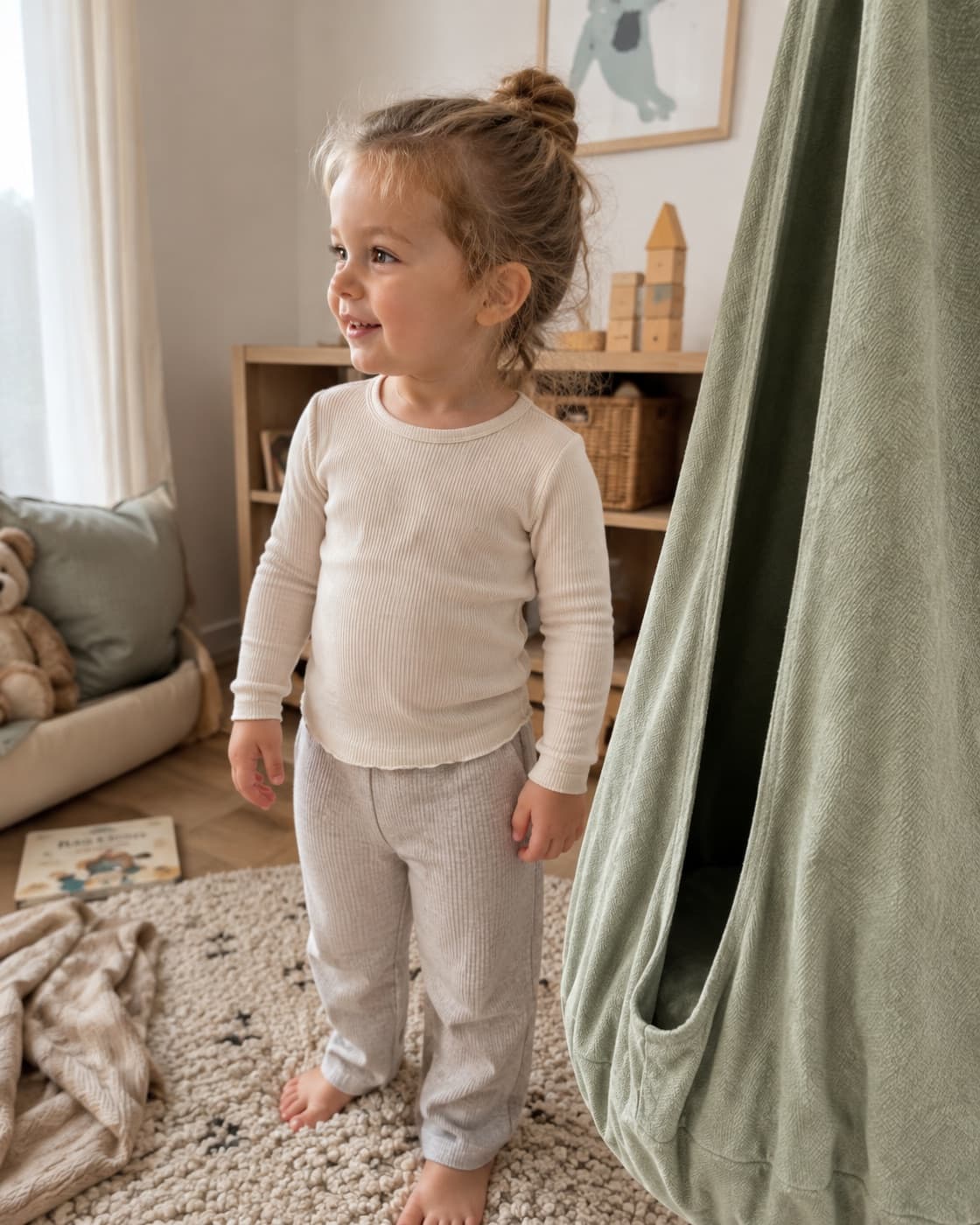
Every piece in the Bees & Blooms collection — our [children's sofas](/shop/sofas), [bean bags](/shop/bean-bags), [ball pits](/shop/ball-pits), [cocoon swings](/shop/swings), and [floor cushions](/shop/floor-cushions) — carries OEKO-TEX® Standard 100 certification across all components: foam, fabric, dyes, and accessories.
The Bottom Line
For adult furniture, OEKO-TEX® is a nice-to-have. For children's furniture, it's the baseline.
Children's sustained physical contact with foam and fabric, their developmental stage, and their more permeable biology make material certification more important here than almost anywhere else in the home. When you're deciding where to prioritise quality, this is one of the few areas where the difference isn't visible — but genuinely matters.