Choosing the right children's sofa is one of the most practical decisions you'll make when setting up a child's bedroom or play area. Done well, it becomes a fixture of their childhood — a reading corner, a jumping pad, a sleepover bed, and a quiet retreat, all in one. Done poorly, it ends up in the attic within a year. This guide covers everything you need to know to get it right the first time.
What Age Is It For?
The answer shapes almost every other decision. Children's sofas generally work best for ages 3–10, but the sweet spot depends on the design.
For toddlers (ages 2–4): Look for low-profile, floor-level designs with soft foam construction and no sharp edges. The key safety feature isn't the sofa itself — it's the fall distance. A sofa where the seat is 15–20 cm off the ground is far safer than a scaled-down adult design with a frame.
For older children (ages 5–10): Comfort and durability matter more. Children this age use their sofa intensively — they read on it, eat snacks on it, and quite often bounce on it. Look for high-density foam that holds its shape over time, and covers that can be removed and washed.
Foam vs Fibre Filling: What's the Difference?
This is the question that separates functional children's sofas from decorative ones.
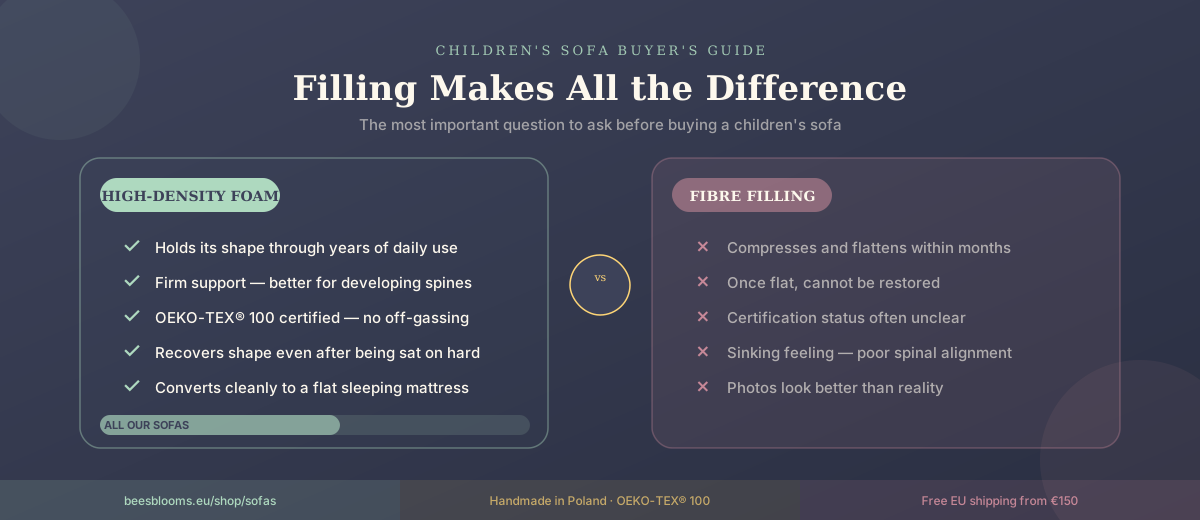
Fibre-filled sofas look beautiful in photos. They're plump, pillowy, and photographically perfect. In practice, they compress over time and lose their shape within months of regular use. Once flat, they're uncomfortable and generally irreparable.
High-density foam is denser and initially less squishy, but it maintains its shape for years. Quality foam also gives a firmness that's actually better for children's developing spines — a child slumping into a collapsed fibre sofa is not sitting well.
Our [children's sofas](/shop/sofas) use a layered high-density foam core tested to maintain its profile through years of daily use. The difference is noticeable after the first year.
Covers: Removable Is Non-Negotiable
Children make mess. A children's sofa with a non-removable cover is asking for trouble. Whether it's a spilled drink, a muddy afternoon, or a stomach bug, you will need to wash the cover.
Look for:
- Full zip-off covers that remove completely (not partial unzip)
- Machine-washable at 30°C — 60°C washing degrades foam and fabric faster
- Colour-fast fabric that doesn't fade with repeated washing
Our sofas come with velvet covers that unzip completely and wash at 30°C without fading or shrinking. They come out looking new.
The Convertible Sofa: Sleep Mode
One feature that dramatically increases the value of a children's sofa is the ability to convert to a sleeping mattress. A sofa that unfolds flat into a full-length mattress means:
- Sleepovers become easy — no extra floor mattress required
- It grows with the child; older children use it as a proper bed for friends
- The price-per-use drops significantly
The unfolding mechanism matters. Look for designs where all sections unfold flat and adjacent (no gaps, no raised ridges) and reassemble quickly — children will do this themselves.
Sizing: Match the Child, Not the Room
The most common buying mistake is purchasing for the room rather than the child. A sofa that's beautifully proportioned in a large room may be too wide for a child to sit comfortably on, or too deep for short legs to reach the floor.
A good rule: sitting on the sofa, the child's feet should either touch the floor or the sofa should be low enough that the drop is safe. If a child's feet dangle well above the ground, they're sitting in an adult-proportion item.
OEKO-TEX® Certification: Why It Matters
Children press their faces into their furniture. They chew on corners. They sleep in contact with fabric and foam for hours. This is why textile certification matters more for children's products than almost anything else.
OEKO-TEX® Standard 100 certifies that every component — foam, fabric, dyes, zips — has been tested and found free from more than 100 harmful substances. It's not a marketing label; it's an independent laboratory certification that runs on a component-by-component basis.
Every [children's sofa in our collection](/shop/sofas) carries OEKO-TEX® 100 certification. When you're buying for a toddler who will nap face-first on the sofa, this matters.
What About Animal Prints?
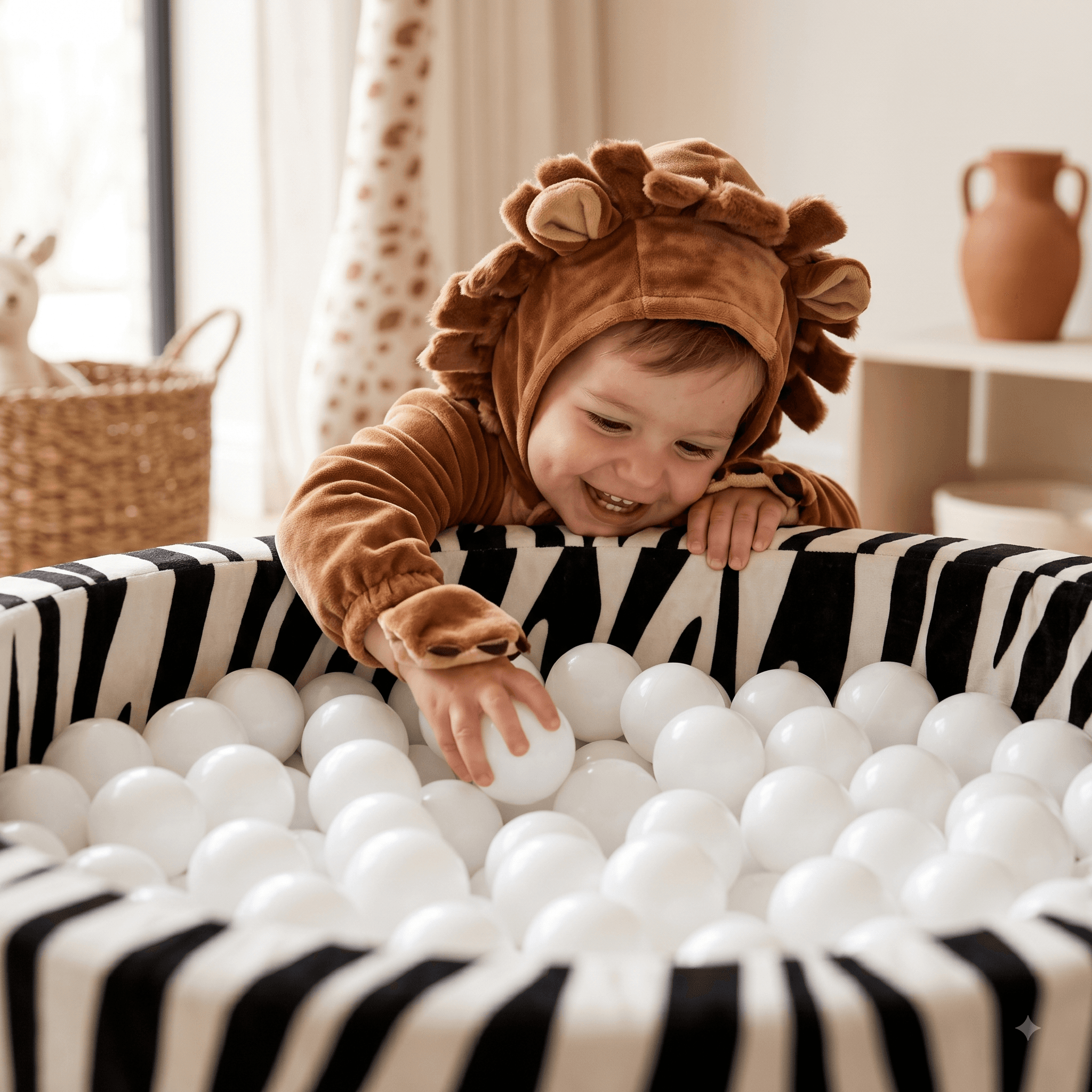
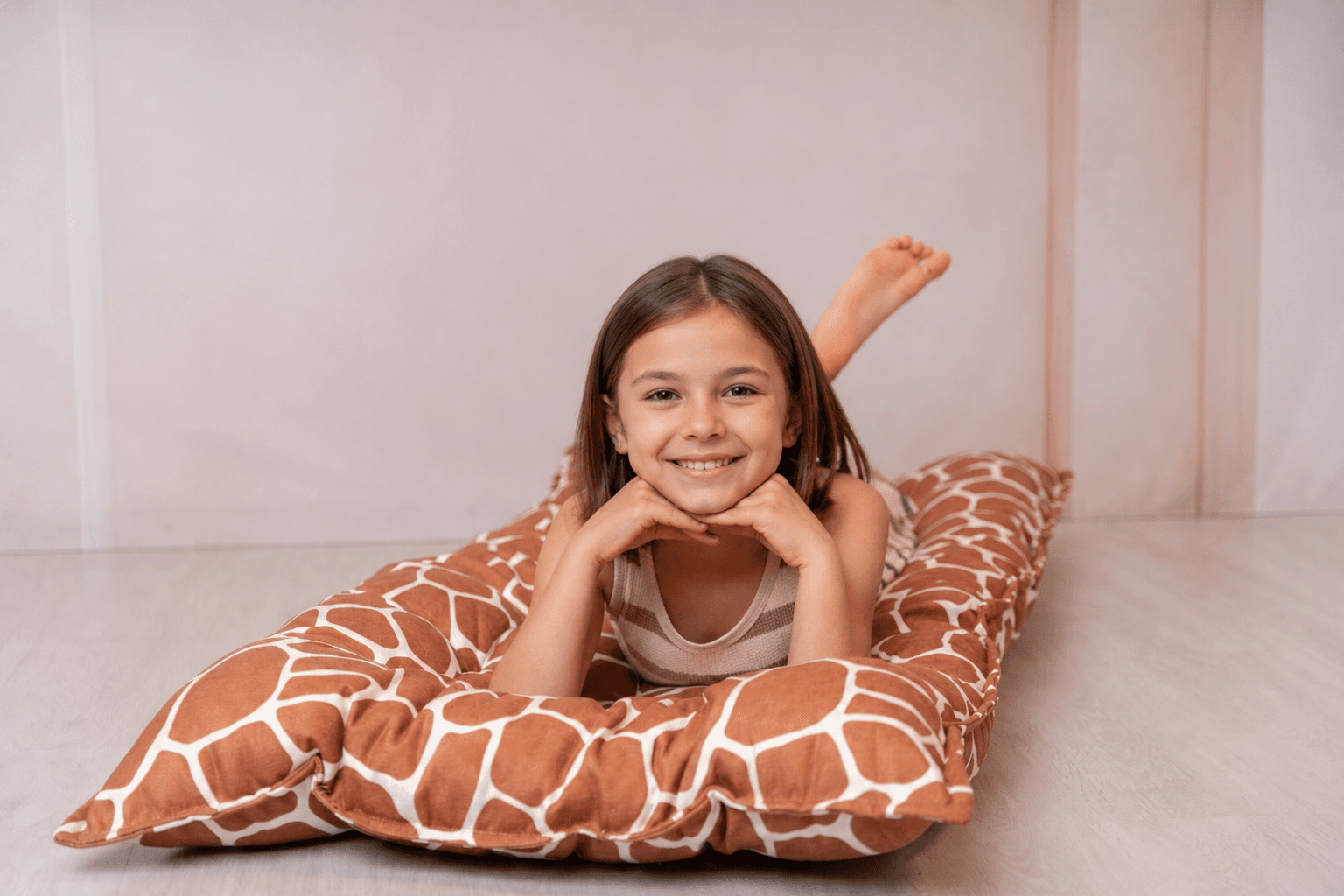
Animal prints — cow, giraffe, zebra, leopard — have become popular for good reason. They're distinctive without being overwhelming, they read as playful without being childish in the "they'll grow out of it" sense, and they work in almost any colour scheme.
Our animal-print sofas use the same high-density foam and OEKO-TEX® certified covers as the solid colours. The pattern is part of the fabric, not printed on top, so it doesn't fade or crack over time.
Summary: What to Look For
- High-density foam — not fibre filling
- Zip-off, machine-washable cover at 30°C
- Low profile appropriate for the child's age
- Converts to mattress for sleepovers
- OEKO-TEX® certification on all components
- Sized for the child, not the room
Ready to explore? Browse our full range of [handmade children's sofas](/shop/sofas) — made in Poland, certified safe, and built to be lived in.